
Am I a good enough parent?

I’m just about to fall asleep after an incredibly busy day.
Eye patch on. Ear plugs in. Weighted blanket pulled up. Alarm set.
Sam, my early-riser husband, is already pretty much fast asleep.
I’m in that seconds-away-from-deep-sleep state when my Apple Watch starts frantically vibrating. It’s son number two - at university - who operates in a different time zone to us (not literally, just metaphorically).
He’s FaceTiming me, and so of course I pick up.
Wild horses wouldn’t stop me - let alone a deep desire for sleep. Not only because I’m a mother, which feels reason enough, but because he hasn’t long had major surgery, which delayed his return to uni this term. And because there are a million reasons your child might want to talk to you, not all of them are reasons you can ignore just because the timing is inconvenient.
Like many of you reading this, the days are FULL.
Full of good things a lot of the time, and I’m certainly not moaning, but full nonetheless. I would argue (and this may be an age or capacity thing) that they are more demanding than they have ever been. In many ways, more so than when the children were little (sorry parents of little ones: it doesn’t get easier, it just morphs into differently challenging).

My work demands are greater than ever, as I’m at the age where responsibility tends to increase. On paper, my home responsibilities look like they should be reducing - the boys are older, and one is even getting married this year (!) - but I don’t yet feel the mental space you might expect.
The needs of teens and older children don’t disappear. They get bigger, more complex, and you can’t seem to fix them like you used to with a cuddle and a wipe of a tear.
Many of you will also be fully immersed in the sandwich years, caring for parents while still parenting your own children. I have huge empathy for anyone holding that particular juggle.
In the midst of all this, the responsibilities, the to-do lists, the emotional load, it’s understandable to feel overwhelmed, exhausted, and unsure of whether you’re managing it all.
Have I been a good enough parent?
It’s a question I ask myself regularly, and I suspect many of you do too.
That’s why this week’s podcast is simply meant to offer a little encouragement. A boost for the way. If you’re working and parenting, at any age, this episode is for you.
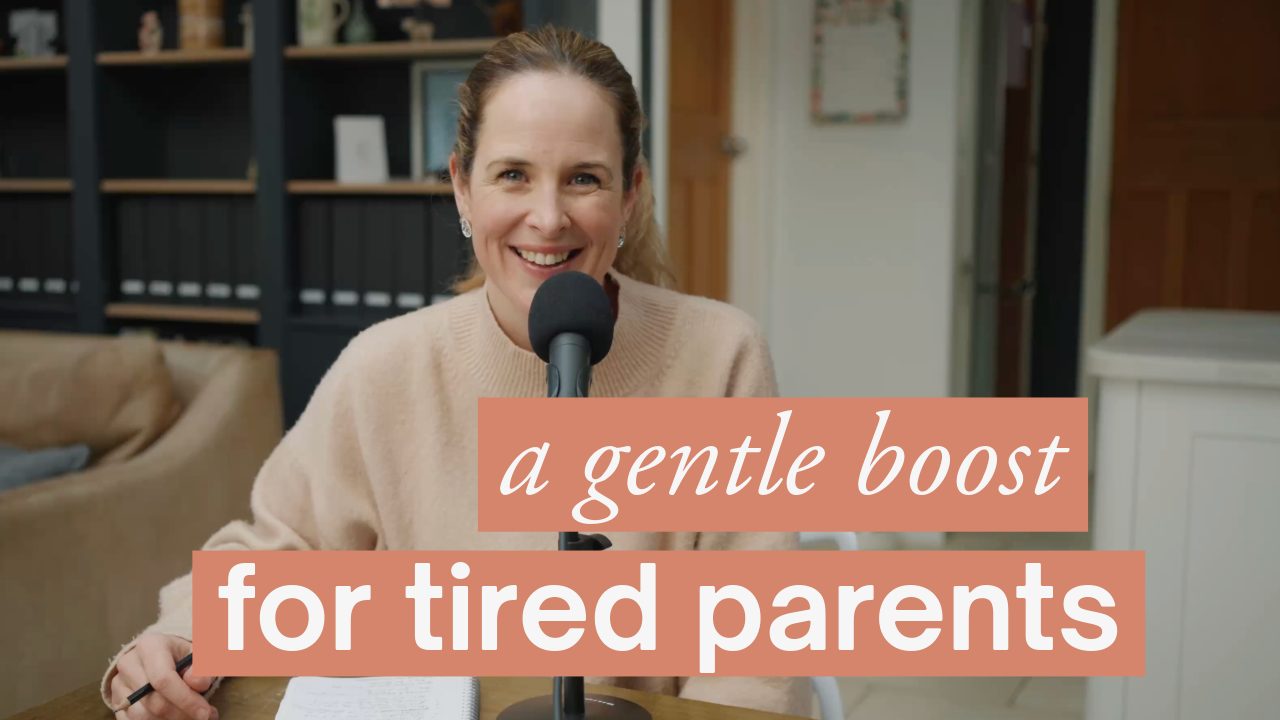
It’s designed to help you feel a little more seen, heard, and supported. Things to ground you, steady you, and help you keep perspective. I won’t cover them all here, but I’ll offer a couple for you to reflect on now.
Your children are not merely the sum total of you and all you have done
They have their own choices to make. Their own agency.
What they achieve, and the ways they struggle, are not solely down to you. You don’t get to take all the credit. And you don’t have to carry all the responsibility.
It’s not your job to protect them from everything
Of course we want to. What parent wants to see their child struggle? But deep down we know that hard things are part of growing.
Disappointment, pain, rejection - these are not failures of parenting. They are part of being human. They will face difficult moments, and you cannot shield them from all of them.
The ordinary and everyday are more important than you realise
We tend to look for the big gestures. The memorable moments. But it’s the everyday things - showing up, the packed lunches, the lifts, the texts, the walk in the park - that pay the real dividend over time.
One gentle question to sit with
Here’s a question for you, and for me, too:
If presence were measured alongside the competing demands of work and parenting, would you judge yourself differently?
In The Purpose Pursuit, I talk about 10% tweaks: small, realistic shifts that help us live and lead better without overhauling everything.
Here are three 10% tweaks for parents who are tired, stretched, and still deeply invested:

When something feels heavy - a decision they’ve made, a struggle they’re facing, a path you wouldn’t have chosen, gently remind yourself:
This is not all mine to carry.
A 10% shift might look like silently naming what is yours (love, guidance, availability) and what is theirs (choices, consequences, growth). Naming what you can do, and what you need to let go of.

Instead of asking, “Am I doing enough?” try asking, “Where did I show up today?”
The text you sent.
The call you took when you were exhausted.
The meal, the lift, the listening. You might surprise yourself of how present you actually are.
Nothing dramatic, just the day to day stuff. That’s where most of the real work happens.

When you get it wrong (because you will), aim for repair rather than self-reproach.
A simple, “I wish I’d handled that differently,” or “I’m still learning,” does more good than trying to be endlessly composed, correct, or even defensive.
I know it means a lot to my own children when I simply own my part, and say sorry.